
Two opportunities in Arctic Research: PhD Winter Field Corse and Post-Doc Position
INTERACT aims to share information useful to the Arctic research community, including career development opportunities, especially for early-career researchers. Below are two opportunities from research stations and institutions within the INTERACT network.
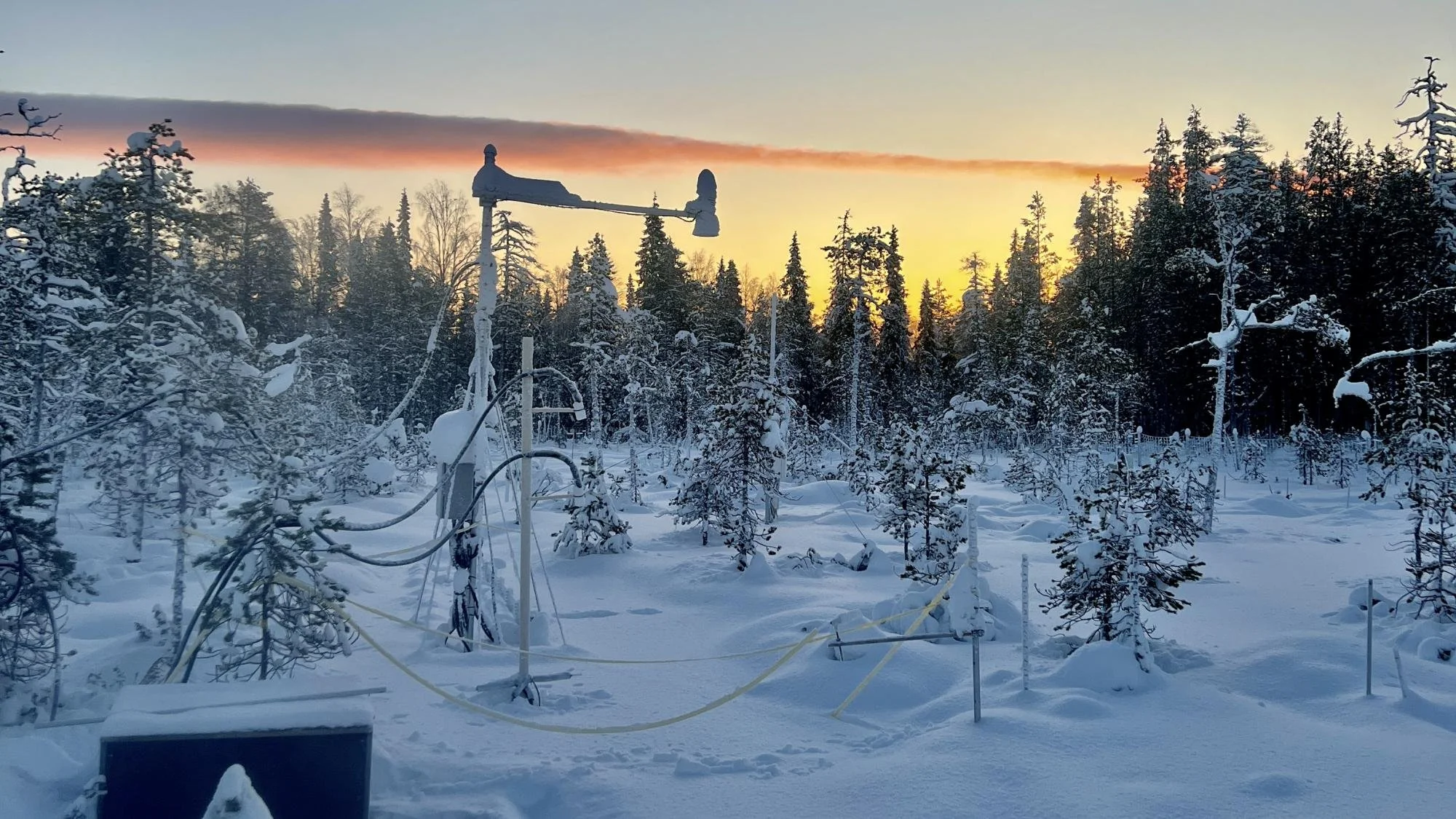
From Cryscope Project website. Measurement Setup at the Oulanka Research Station. (Photo by Shaakir Shabir Dar)
Winters under Pressure: Life in a Changing Cold Environment
Multidisciplinary winter field course for PhD researchers and Master students
Date: 22 February – 1 March 2026 (effective course dates 23 Feb – 1 March)
Location: Oulanka Research Station, Finland
This multidisciplinary course will form an introduction to a wide range of topics related to biotic and abiotic processes which in different ways are active during winter in northern terrestrial and freshwater environments. Snow is the main component of the northern winters, and we will be measuring the snowpack properties and the applicability of stable water isotopes to understand snowpack metamorphism. We will be studying microbial activity in streams, soil, and groundwater, below the snow and ice. The microbial activity is linked to greenhouse gas (CO2 and CH4) exchange between the ecosystems and the atmosphere, and the students are introduced to measurements of these activities and gas exchange as well as the role of vegetation in these processes. All topics will be explored through the lens of ongoing climate change, with a particular focus on warming winters, increasingly frequent extreme weather events, and episodic thaw-freeze cycles occurring even in mid-winter.
The course is a mixture of lectures and excursions which will end with group-based project work where the students get exposed to working in the field under challenging winter conditions and present their own results based on the data collected during the course. Provided attending the course teaching and successful delivery of the course project and assignment, students can be awarded 5 ECTS study credits.The Winter School is part of the CryoSCOPE project and coordinated by the University of Oulu Water Energy and Environmental Engineering and the Ecology and Genetics research units, and in collaboration with Aarhus University, Denmark.
Registration is required. Deadline for registering is 15.12.2025, providing your 200-word motivation letter and supervisor support letter.
The course is free of charge, no course fees to pay upon registration. However, the admitted students are expected to cover the costs for travelling to Oulanka, research station, subsistence during the course, housing at the station.
More information on the website: https://cryoscope-project.eu/winter-school/oulanka-2026/
Job opportunity: Postdoc in muskox energetics and population modelling
Institution: Aarhus University, Department of Ecoscience - Arctic Ecosystem Ecology, Frederiksborgvej 3994000 Roskilde
Employment type: Fixed term full-time position, 1 May 2026 - 30 Apr 2028 (ID: 19647)
Deadline to apply: 9 January 2026, 23:59 CET
Aarhus University’s Department of Ecoscience invites applications for a 2-year postdoc to co-develop a spatially-explicit individual-based dynamic energy budget model (DEB-IBM) for high-Arctic muskoxen roaming the Zackenberg region in Northeast Greenland. The position will explore how movement and energetics shape population dynamics under climate change and harvest scenarios, working with an international team across Greenland, Canada, and Alaska.
For more information about the job description, application procedure, salary and contract, and to apply, please visit Aarhus University website: https://international.au.dk/about/profile/vacant-positions/job/postdoc-in-muskox-energetics-and-population-modelling